A Table Set for Friends, Using What Is Already in the Cupboard
Set a welcoming table for friends with cupboard pieces you own, using a simple visual anchor to combine plates, serving dishes, and textiles with ease.
Setting a table for friends does not require matching plates or a fresh trip to the store. A welcoming table setting can start with one useful piece from your cupboard, then bring together plates, serving dishes, and textiles that make sense for the meal.
The aim is not to make every place setting identical. It is to make the table feel considered while keeping food easy to serve and guests comfortable. Begin with the meal’s practical needs, choose one visual anchor, and let the other pieces support it.
What does the meal need on the table?
Before choosing colors or arranging napkins, picture what guests will eat and how it will reach them. A soup supper calls for bowls and a ladle within reach; a shared roast needs a platter with enough space to pass around. The menu sets the basic inventory, so decorative pieces do not crowd out useful ones.
Make a quick list of what each person needs: a dinner plate or bowl, a drinking glass, and the cutlery for the food. Add shared serving tools, such as a spoon for vegetables or tongs for salad. If dessert will follow, decide whether plates and forks can wait nearby instead of occupying the table from the start.
Check the table’s shape and the room guests will use to move around it. Leave a clear path for passing dishes, and avoid placing tall objects where they block conversation. A low bowl or a small bundle of herbs can add a focal point without turning the center into an obstacle.
Which cupboard piece should anchor the arrangement?
Choose one item that already belongs in the meal and gives the rest of the setting a direction. It might be a blue serving bowl, a stack of cream dinner plates, a checked tablecloth, or a set of sturdy tumblers. The anchor does not have to be rare or decorative; its job is to provide a cue you can repeat in small ways.
Look for a feature that can connect unlike items: a shared color, a similar shape, a natural material, or a quiet pattern. If the anchor is a patterned platter, plain plates may let it stand out. If the anchor is a simple white tablecloth, colored glasses or napkins can provide the character.
Use the anchor to guide choices, not to impose a rule that every piece must match it. A soft green bowl can sit comfortably beside warm-toned plates if another detail, such as a linen napkin or wood serving board, makes the combination feel intentional. The table can include variation and still have a clear center of gravity.
How can different plates and serving pieces work together?
Start with function and scale. Plates should give guests enough room for the meal, while serving bowls and platters should suit the amount and type of food. A shallow bowl can hold salad, while a deeper one may be better for saucy vegetables; a broad platter can keep sliced food easy to reach.
Then sort the pieces by visual weight. If dinner plates are bold or heavily patterned, use quieter bowls and glasses nearby. If the plates are plain, a patterned serving dish can carry more visual interest. Similar shapes can create a gentle connection, but a deliberate contrast—such as rounded plates beside an oval platter—can also look natural.
Different sets may vary in shade, glaze, or edge shape. Arrange a sample place setting before laying the whole table, and see whether the pieces look related under the room’s lighting. If one plate feels out of place, try it at another setting or use it for bread rather than forcing a complete match.
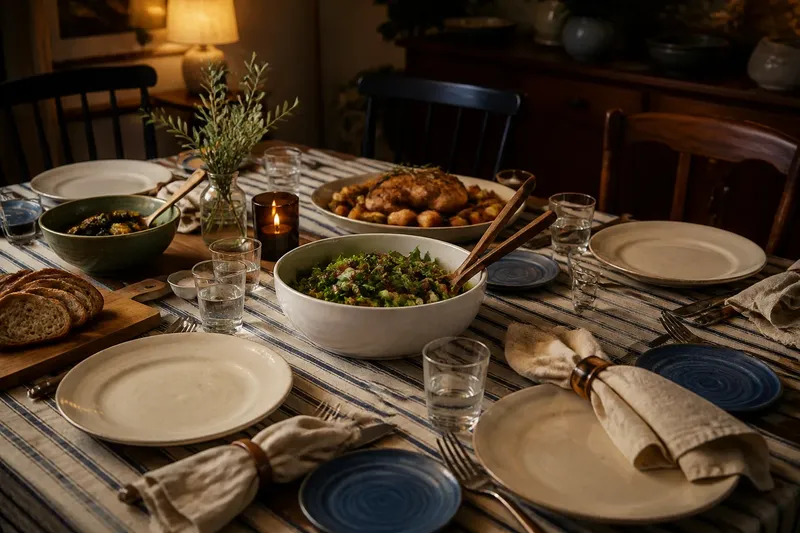
Imagine you have four cream plates, two blue side plates, a white serving bowl, and a striped cotton tablecloth. Put the cream plates at each seat, use the blue plates for bread or dessert, and bring the white bowl forward as the shared salad dish; the stripes connect the colors while each item keeps a clear job.
How should textiles add comfort without taking over?
Textiles can soften a mixture of ceramics and glass, but they also need to work with the meal. A tablecloth protects the surface and can quiet a busy arrangement; placemats define each setting when the table itself is attractive or easy to wipe down. Cloth napkins are useful if you have them, but clean paper napkins can still be arranged neatly.
Choose a textile by its scale and tone. A large check or stripe can make small, mismatched pieces feel connected, while a subtle solid lets patterned dishes remain visible. If the cloth is colorful, keep the centerpieces restrained; if it is plain, a colored napkin or a folded tea towel beneath a serving dish can add a small accent.
Consider how fabric behaves during the meal. Loose, trailing cloth can catch on chairs or serving dishes, and bulky folds can take up space beside a plate. Fold napkins simply, and keep absorbent cloths or spare napkins accessible rather than treating them as part of the display.
What small choices make the table easier to use?
Place shared dishes where guests can reach them without leaning across another person’s setting. Put serving utensils beside the food they belong to, and keep drinks and condiments from blocking the main route for passing plates. If space is tight, serve one course at a time rather than setting every dish out at once.
Use glasses that suit what you are serving, not an elaborate place-setting diagram. A water glass is enough for a casual meal; add another glass only if it will be used. Keep candles low and stable if you light them, and leave room for hot dishes to land.
Before guests arrive, sit in a chair at the table and look at the setting from that height. Check whether the centerpiece hides anyone’s face, whether each person has elbow room, and whether the serving pieces can be passed. One small rearrangement now can make the meal feel much more relaxed.
What should you check before guests sit down?
Can mismatched plates look intentional?
Yes. Repeat one visual cue, such as a color, material, or shape, and give each plate a clear role. A mixed collection feels deliberate when the food and serving pieces also belong in the arrangement.
Should every place setting have the same pieces?
Not necessarily. Keep the basic needs consistent, such as a plate, drinking glass, and the cutlery required for the meal, then vary side plates or napkins if that helps use what is available.
Where should serving dishes go?
Put them where guests can reach them and where there is room to set down a serving spoon. For a crowded table, keep extra dishes on a nearby counter and bring them over as needed.
What if I do not have enough matching napkins?
Use a mix of clean cloth napkins, folded tea towels, or paper napkins arranged in one accessible holder. Keep the arrangement simple so guests can take what they need without wondering which item is decorative.
How can you make the arrangement feel personal?
Add one modest detail that belongs to the gathering rather than turning the table into a display. A small bowl of citrus, a handful of garden herbs in a jar, or a dish of olives can serve as both decoration and food. Choose something that will not interfere with serving or conversation.
Let useful objects carry the style. A wooden board can hold bread, a ceramic jug can serve water, and a familiar bowl can bring color to the center. When an item has a job, it is less likely to feel like clutter, and guests can interact with it naturally.
After setting the table, remove anything that has no clear purpose. Keep the pieces that help serve the meal, make the setting comfortable, or give the gathering a personal note. A table set from the cupboard can feel generous precisely because it is ready for people, not arranged to prove that every object belongs to a set.
For your next meal with friends, choose the cupboard anchor first, then set out only what the menu needs. That simple order makes it easier to combine what you own and gives the table a welcoming shape without asking you to buy a coordinated set.