How to Reuse a Sideboard Without Making It a Clutter Magnet
Sideboard reuse works best when drawers, cupboards, and the top each have a clear job, so the cabinet serves a new room without becoming overflow storage.
Sideboard reuse can turn a dining-room cabinet into useful storage elsewhere, but an empty wall is not enough reason to move it. Start by tracing what happens to the objects inside: if they have no sensible new home, the cabinet may simply transfer clutter from one room to another.
What should you decide before moving a sideboard?
Sort the contents by how often they are used and where they are needed. Serving dishes might stay near the dining area, while a drawer of spare candles could make sense in a living room; the cabinet’s new assignment should follow the household’s routines, not its old label.
Then name one main job for the cabinet and one secondary job for its top. For instance, it might store board games and provide a place for a lamp. If you cannot name what belongs in its drawers or cupboards, pause before moving it.
How can you match its compartments to a new room?
Look inside before choosing a destination. Deep cupboards can suit bulky throws or reusable shopping bags, while drawers are easier for small items that need sorting. Adjustable shelves, if the cabinet has them, can help fit the contents without forcing objects into awkward stacks.
Choose a room where the stored items are used. Games belong near the seating area where people play them; entry accessories belong near the door. This simple link between contents and routine makes it easier to put things back rather than leaving them on the top.
Will it work in an entry hall?
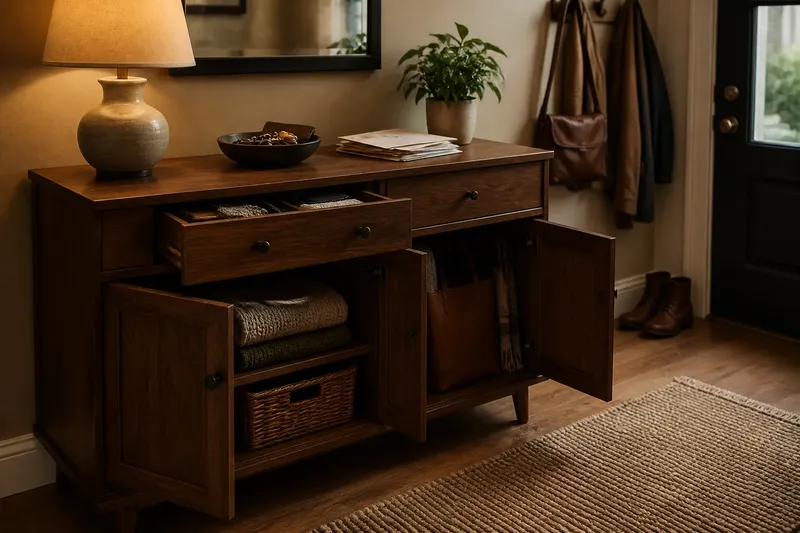
A sideboard can gather keys, mail, and bags, but its footprint must leave a comfortable route through the hall. Check the path with doors open and with the cabinet’s drawers extended; a piece that fits against the wall may still interfere with a doorway or coat hooks.
Give the top a defined landing job. A small bowl can collect keys, and one drawer can hold gloves or other everyday items. Keep mail moving: sort it when it arrives, rather than letting the surface become a permanent pile.
Could it serve a living room or bedroom?
In a living room, a sideboard can store games, blankets, or media accessories. Before using it for electronic equipment, check cable access and ventilation, and do not enclose heat-producing devices in a cabinet that cannot safely accommodate them. If the setup is awkward, use the sideboard for accessories instead.
In a bedroom, inspect the drawers and cupboards against the clothing or linens you plan to store. Broad cupboards may suit blankets better than small garments, while drawers can make frequently used items easier to reach. Keep the bed, closet, and windows accessible, and check that doors and drawers can open fully.
What should you check before giving it a new job?
- Contents: Observe whether the proposed items fit the drawers and cupboards without forced stacking; if they fit and are used in that room, assign them there, but if not, choose a different category or room.
- Walking path: Observe whether people can pass the cabinet with the relevant doors and drawers open; if the route stays clear, keep the placement, but if it narrows or blocks access, try another wall or room.
- Access: Observe whether the items you use often are easy to reach; if they are, put them in the most accessible drawer or cupboard, but if not, rearrange the contents or choose another storage piece.
- Top surface: Observe whether the planned lamp, key bowl, or other item leaves room for the cabinet’s daily task; if it does, keep the display simple, but if not, remove decorative objects or change the surface job.
- Condition: Observe whether shelves, doors, drawers, and hardware work properly; if they do, proceed with suitable contents, but if anything is loose or unstable, avoid loading it and seek appropriate repair advice.
- Room need: Observe whether the cabinet fills a real storage or surface gap; if it does, move it, but if it duplicates storage or creates another clutter spot, leave it where it is or find another use.
How do you handle the move and placement?
Empty the cabinet first and inspect its hardware, shelves, and finish. Check the route through doorways and around turns, and do not force a heavy or awkward piece through a tight space; ask for help or contact a qualified mover if needed.
After placing it, check that it sits steadily and that drawers and doors work without striking nearby furniture. For a tall or unstable cabinet, or one children may pull open, consider suitable anchoring and get professional advice if you are unsure. Follow the maker’s care instructions for the finish and hardware.
Which sideboard reuse questions come up most often?
Can a sideboard replace an entry console?
Yes, if its depth leaves the hall usable and its compartments suit the items people bring home. If the cabinet crowds the route, a slimmer console or another location is a better fit.
Can a dining sideboard hold a television?
Possibly, but check the screen position, equipment fit, cord access, and ventilation before using it that way. If electronics cannot sit safely and conveniently, use the cabinet for games or media accessories instead.
What belongs on a sideboard top?
Choose items that serve the room, such as a key bowl in the entry or a lamp in the living room. Leave enough usable surface for the cabinet’s assigned task instead of filling it with display objects.
How can you stop a reused sideboard from collecting clutter?
Give each drawer or cupboard a specific category and decide what the top is for. When an item does not belong to one of those jobs, put it away elsewhere rather than treating the cabinet as general overflow.
What does a workable reuse plan look like?
Say you have a sideboard with two cupboards holding serving dishes used only for occasional meals, plus a drawer of candles. Your entry has no place for mail or bags, and the hall is wide enough for the cabinet without blocking the route. You move the dishes to an existing dining-room cupboard, place the sideboard in the hall, assign one drawer to keys and gloves, and reserve part of the top for mail sorting; the result to look for is a clear landing spot with the walking path still open.
For sideboard reuse, judge the move by what changes in daily use: the right belongings should be easier to put away, the room’s route should remain clear, and the top should still serve its assigned task. If one of those conditions fails, adjust the contents or placement rather than asking the cabinet to do every job at once.