Curtains or Blinds: Choosing by the Window’s Job
Curtains or blinds? Match privacy, light control and room furnishings to the window’s daily job, then choose a treatment that feels at home.
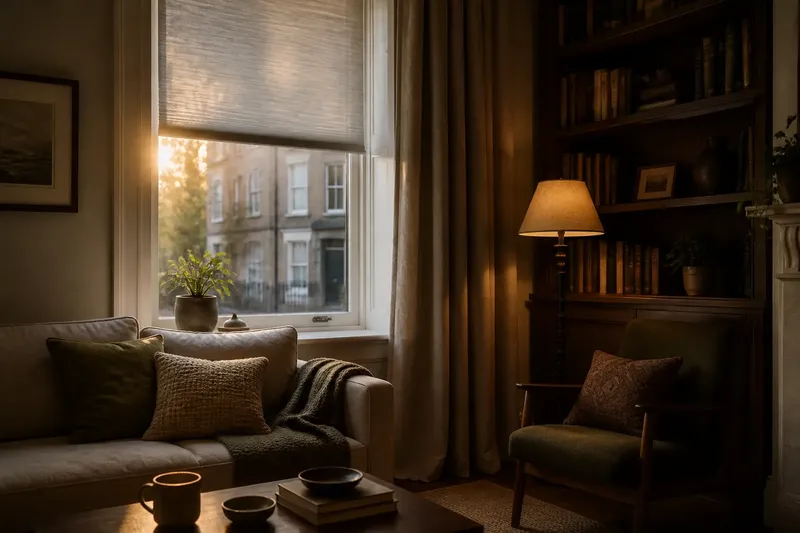
At breakfast, a low sun may land straight on the kitchen table; after dark, the same window may face a neighbour’s lit room. Choosing curtains or blinds starts with those daily demands, not with a fabric or colour you happen to like. Decide what the window needs to do, then look for a treatment that suits the room around it.
What does the window need to do?
Watch the window at the times you use the room. Note when glare reaches a screen, when passersby can see in, and whether daylight is welcome or distracting. A window’s job can change from morning to evening, so think about the full routine rather than a single view.
Make a short priority list. Privacy, adjustable light, a softer appearance, and a clear view are common aims, but one may matter far more than the others. That priority is your first filter: a simple blind may suit a window where precise adjustment matters, while curtains can make a room feel more finished and soften hard edges.
When are blinds the better fit?
Choose blinds when the main challenge is controlling light close to the glass. A roller blind can be raised out of the way for a clear view, then lowered when glare becomes bothersome. Venetian blinds let you tilt slats to redirect light while limiting a direct line of sight; cellular styles offer a softer, less linear appearance.
Blinds often fit compact rooms, windows beside furniture, and interiors where a fabric panel would crowd a walkway. Their clean outline can sit comfortably with simple furnishings, including a narrow desk or a built-in bench. Consider how the blind looks when fully raised as well as when it covers the window: its headrail and visible folds remain part of the room.
For privacy, distinguish between blocking a view and blocking light. A translucent roller blind can obscure details in daylight while still letting the room glow, but it may not provide the evening privacy you want with lights on. A more opaque material may suit a bedroom or street-facing room, though it also reduces the light available when lowered.
When do curtains make more sense?
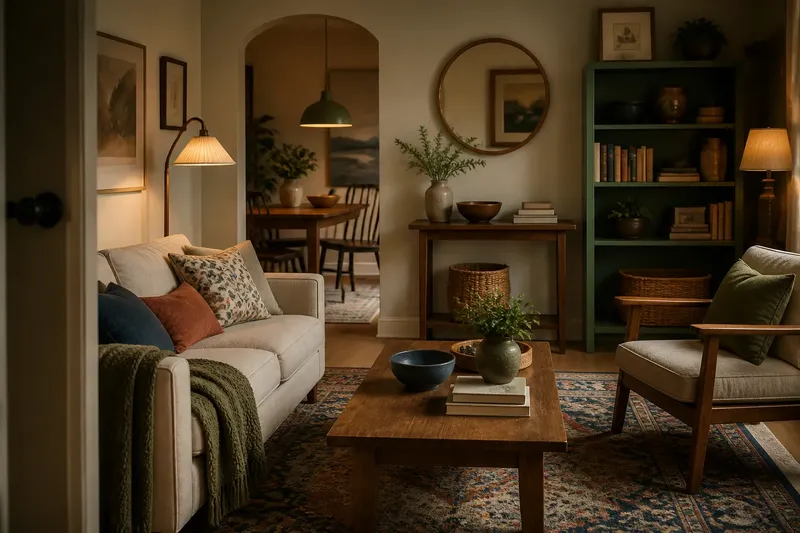
Choose curtains when you want the window treatment to contribute substantial colour, pattern, or texture. A plain wall and a simple sofa can take a patterned curtain as the room’s strongest surface; in a room already full of prints, a quiet linen-look fabric may bring the window into the composition without adding another competing motif.
Curtains can also soften a room with visible wood, tile, or metal. Their folds add movement beside hard, flat surfaces, and a longer panel can make a window feel visually connected to nearby furniture. They need space to stack beside the glass, however. Check that open curtains will not cover a radiator, block a cabinet, or press against a chair.
For bedrooms, lined curtains can help reduce incoming light, but fabric alone does not automatically create complete darkness. Consider the gaps at the sides and top, and decide whether the room needs a close-fitting blind as well. If you combine treatments, keep their colours and visual weight in balance so the window does not overwhelm the furnishings.
How should privacy and daylight shape the choice?
Start with the view from outside and the direction of the light. A street-level living room may need privacy through the day, while a garden-facing room may benefit more from a treatment that opens fully. In either case, check the sightline from the places where people actually sit, stand, or work.
For a room that needs both daylight and privacy, consider a top-down, bottom-up blind or a sheer curtain paired with a more opaque layer. These arrangements let you admit light from above while covering the part of the window most exposed to view. If that added complexity feels unnecessary, choose the treatment you will be comfortable adjusting as the day changes.
Say you have a sitting room with a low sofa facing a pavement and a dark wooden bookcase beside the window. Imagine choosing a pale, adjustable blind to soften daytime views, then adding a plain curtain in a warm neutral if the room still feels stark; the expected result is privacy that can be tuned without making the window compete with the bookcase.
Which choice suits your room and routine?
- For a busy kitchen: Consider a roller blind if a fabric panel would sit near a sink, work surface, or frequently opened door. Choose a material and care method suited to the room’s cooking and cleaning conditions.
- For a bedroom with early light: Consider an opaque blind or lined curtains, depending on whether a neat window outline or a softer, fuller look suits the furnishings. Check how much light enters around the edges.
- For a living room with a strong view: Consider adjustable slats or a blind that can be lifted fully, so the treatment does not hide what makes the window appealing.
- For a small room: Consider a blind when curtains would occupy scarce wall space or interfere with furniture. A discreet colour can keep attention on the room rather than the window hardware.
- For a room that feels hard or sparse: Consider curtains in a texture that relates to an existing rug, cushion, or upholstered chair. Borrow a colour already present rather than introducing a new accent without a link.
- For a layered, collected room: Either treatment can work. Use a quiet blind when the furnishings already carry pattern, or let a curtain repeat a modest colour from a chair or artwork without copying its entire design.
Use this list to narrow the options, not to prescribe one style for every room. A room’s layout and your habits should decide between treatments that otherwise seem equally suitable.
What should you check before choosing?
Look at the whole window, including the frame, sill, nearby trim, and furnishings. A blind can make an architectural window feel crisp; curtains can connect it to a sofa or bed. If the window is an unusual shape or sits close to a door, confirm that the chosen arrangement can open and close without obstruction.
Bring fabric or colour samples into the room and view them in daylight and after dark. A shade that looks calm beside a pale wall may become a strong block against dark wood, while a small pattern can appear much busier across a full curtain. Compare the sample with the largest nearby furnishings, not just a cushion.
Check the product label, manufacturer’s instructions, and any relevant local rules for requirements that depend on the window or treatment. For safety-sensitive fitting or a window near a heater, seek qualified help where needed.
Which questions help settle the choice?
Are curtains or blinds better for privacy?
Either can provide privacy if its fabric or material suits the view and the room’s lighting. Consider daytime and evening separately, since a treatment that obscures a window in daylight may reveal silhouettes after dark.
Can curtains and blinds be used together?
Yes, if each layer has a clear purpose, such as a blind for adjustable privacy and curtains for softness or added light control. Keep the combination visually quiet enough to work with the room’s existing furnishings.
Which option makes a small room feel less crowded?
A blind usually takes less wall space than curtains that need room to stack, so it may suit a tight layout. Curtains can still work if the wall beside the window is clear and their colour blends with the surrounding surfaces.
How do I choose a colour that fits existing furnishings?
Use a colour already present in a larger item, such as a rug, sofa, or wooden finish, then decide whether the window should recede or stand out. A neutral treatment can calm a patterned room; a restrained pattern can add interest to a simpler one.
How can the treatment keep working as the room changes?
Think beyond the current arrangement. If you expect to move a desk, change a bed’s position, or reuse the curtains elsewhere, a straightforward colour and flexible hanging style may be easier to keep. Blinds are more closely tied to a particular window, while curtains can often move with household changes if their size and heading suit the new space.
For curtains or blinds, the strongest choice is the one that answers the window’s daily needs and sits naturally beside the furnishings you already own. Settle the practical priority first, then choose the texture, colour, and shape that make the treatment feel like part of the room rather than an afterthought.